





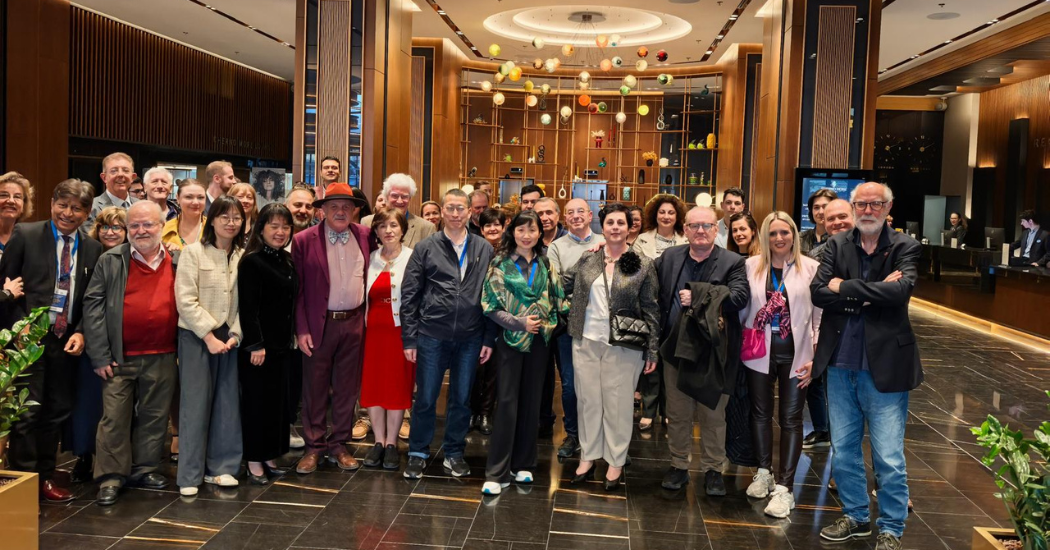
The European Biotechnology Congress 2026 (EuroBiotech 2026), organized under the patronage of the European Biotechnology Thematic Network Association, concluded successfully on 25 April in Varna, Bulgaria. Held from 24 to 25 April, the congress gathered a remarkably broad international community of scientists, clinicians, and industry representatives, confirming its role as a leading forum for the advancement of biotechnology.

A Highly Structured and Multidisciplinary Scientific Programme
Given the breadth of scientific topics and the large number of contributions, the congress was organized into multiple parallel sessions, including both oral presentations and poster sessions. This structure allowed for the inclusion of a wide spectrum of research areas while fostering dynamic scientific exchange among participants. The scientific scope covered virtually all major domains of contemporary biotechnology. Core themes included molecular biotechnology and biosciences, with advances in gene regulation, synthetic biology, and functional genomics. Significant attention was devoted to genomics, transcriptomics, and epigenetics, including high-throughput sequencing and genome-wide analyses. Systems biology and bioinformatics were strongly represented, particularly through computational modeling, artificial intelligence, and multi-omics data integration. Translational and clinical biotechnology formed another central pillar, highlighting the path from bench to bedside through biomarker discovery and precision medicine. In parallel, agricultural and environmental biotechnology sessions addressed sustainability challenges, while pharmaceutical and industrial biotechnology explored bioprocess engineering, biopharmaceuticals, and enzyme-based innovation. Further sessions focused on stem cells, regenerative medicine, and tissue engineering, alongside immunology, vaccines, and infectious diseases, reflecting ongoing global health priorities. Discussions also extended to ethics, policy, and future perspectives, emphasizing the societal and regulatory dimensions of biotechnology. Participation in the congress was particularly strong. The event included invited speakers and many abstract presentations, several of which were delivered by doctoral students and early-career researchers from international institutions. The active involvement of participants throughout the sessions contributed to a rich and stimulating scientific environment. This report presents only a limited selection of the contributions, although all presentations showed clear scientific value and would deserve individual discussion.Hosting Institution and Local Organization
The congress was hosted in the dynamic academic setting of Varna, with the support of the Medical University of Varna. The local organization was led by Svetlana Fotkova Georgieva, whose leadership ensured the effective coordination of the event. She was supported by Nikolai Zhelev, highlighting the strong contribution of the Bulgarian scientific community.Leadership and International Scientific Community
The congress was presided over by Munis Dundar, whose leadership continues to shape the strategic direction of EBTNA. The Executive Committee includes distinguished academics such as Oscar Vicente, Tommaso Beccari, Donald Martin, Anargyros Moulas, Ariola Bacu, Qun Sun, Robert Marks, Iza Radecka, Satya Prakash, and Gary Henehan, among others. The international dimension was further underscored by participation from countries including Turkey, Cyprus, China, India, Canada, and Israel, reflecting the inclusive and global character of the congress.The Contribution of the MAGI Group
A prominent contribution was made by the MAGI Group, which presented a comprehensive overview of its research activities across Europe and the United States. The group’s work focused on the integration of genomics, bioinformatics, and artificial intelligence in precision medicine. Contributions by Matteo Bertelli, Luca Ferrari, Jurgen Kaftalli, Ahmad Abidin, Sara Feizyab, and Ekaterina Chueva highlighted advances in genomic data analysis, multi-omics integration, and AI-driven retinal imaging. These presentations exemplified the translational and interdisciplinary approach that characterizes current biotechnology research.Awards and Scientific Recognition
The congress featured prestigious awards recognizing excellence in scientific research. The Maria Pia Viola Magni Best Oral Presentation Award, dedicated to Maria Pia Viola Magni, was presented to the top-ranked oral contribution, acknowledging outstanding scientific merit, innovation, and impact. In addition, the award dedicated to Kevan Gartland was conferred, honoring excellence in biotechnology research and contribution to the field. These recognitions underscore the commitment of EBTNA to fostering high-quality scientific work and supporting emerging talent.Looking Ahead: Grenoble 2027
During the General Assembly, it was announced that the next edition of the congress will take place in Grenoble. The proposal, associated with Donald Martin, reflects the itinerant nature of the congress and its mission to engage scientific communities across Europe.Science as a Driver of Innovation and Cooperation
The success of EuroBiotech 2026 highlights the crucial role of biotechnology in addressing major global challenges, including energy sustainability, technological transformation, and public health. In a period marked by significant uncertainty, scientific research remains one of the most effective pathways toward resilience and progress. Equally important is the role of science as a model for peaceful international cooperation. The broad participation of countries and institutions demonstrated how scientific collaboration can transcend geopolitical boundaries, fostering dialogue, integration, and shared progress. In this context, the European Biotechnology Congress continues to stand both as a driver of innovation and as a symbol of global scientific unity.



