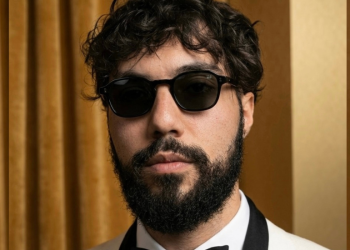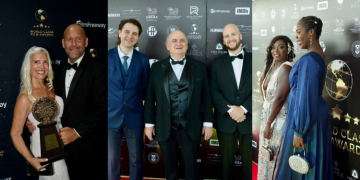


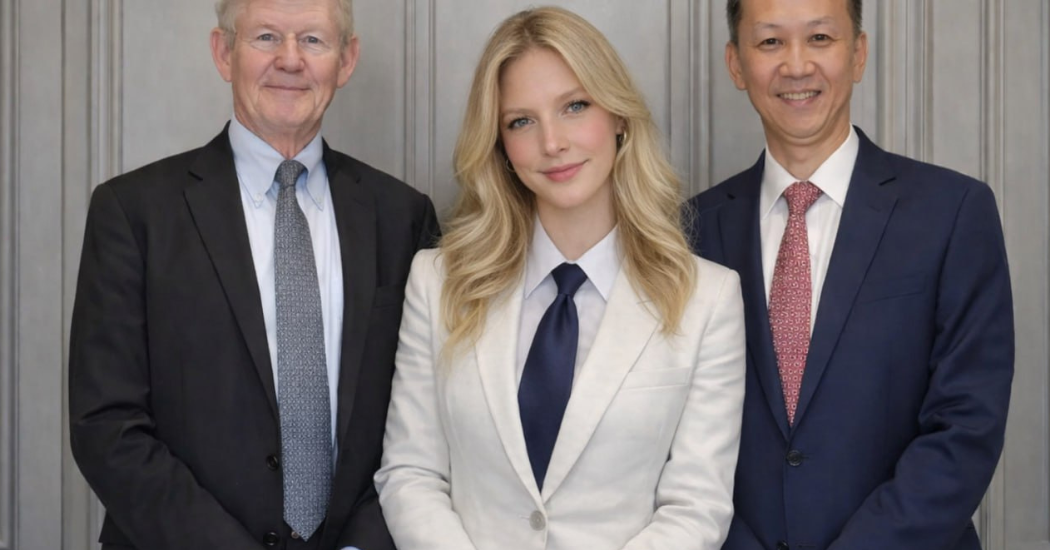
On October 15, 2025, during a farewell courtesy visit by Cui Aimin to Jacob Wallenberg, Francesca Lanza, CEO of the Wallenberg family’s North American private family office, was present and participated in the meeting.
During the overall discussion, both sides engaged in in-depth exchanges on China, Sweden economic and trade cooperation, as well as future industrial collaboration. Drawing on the family office’s global asset allocation experience, Francesca Lanza highlighted opportunities for capital and industrial linkages among North America, Europe, and China, particularly the long-term investment potential in advanced manufacturing, healthcare, and sustainable development.
In the course of the conversation, Francesca Lanza also discussed with Ambassador Cui how family offices can support medium- to long-term cross-border cooperation. This included participating in China-related projects through long-term capital, exploring joint investments with Chinese institutions, and supporting collaborative expansion of Chinese and Swedish enterprises in the North American market.
Both sides agreed that, under the current global economic landscape, strengthening communication among enterprises, enhancing transparency in cooperation, and promoting the two-way flow of capital and technology will help further deepen China–Sweden economic and trade relations and achieve long-term, mutually beneficial outcomes.
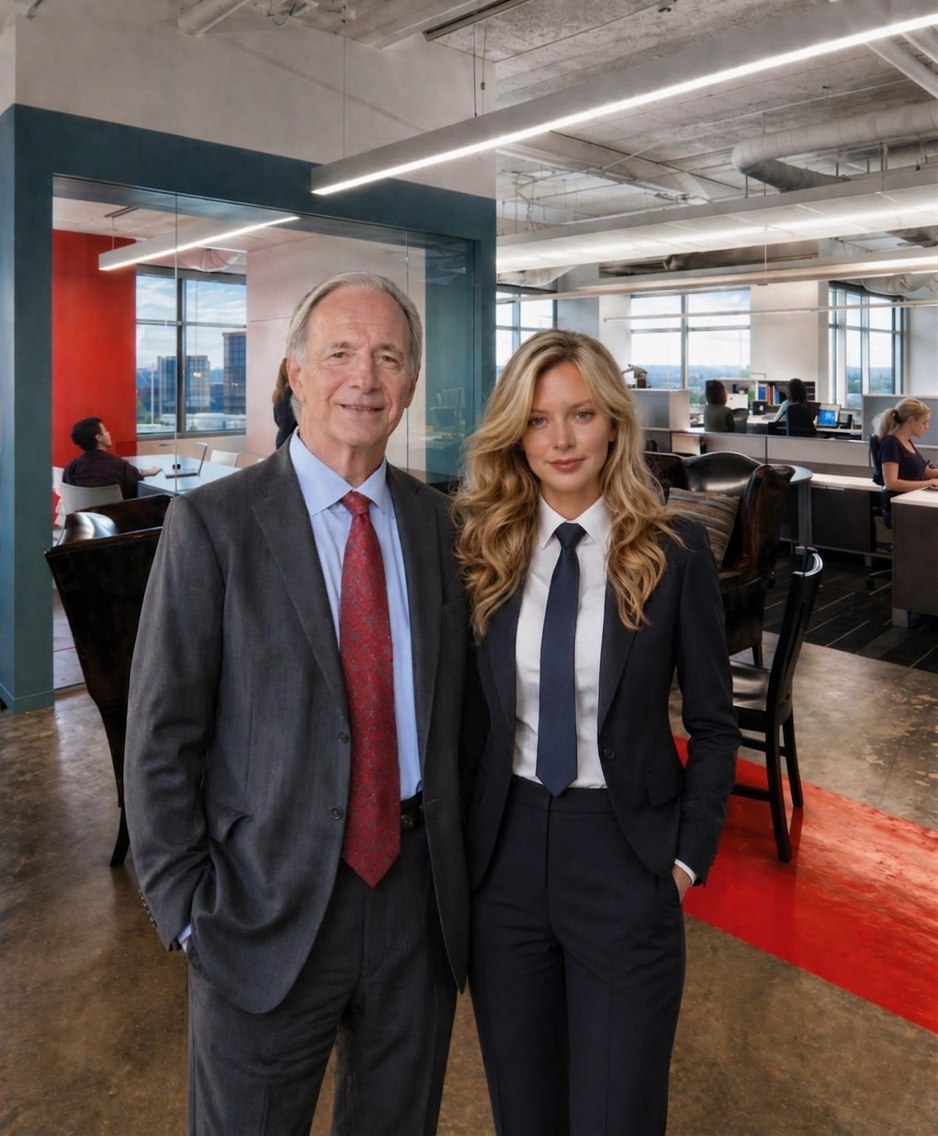
Francesca Lanza, an investor from Milan, established a family office in Los Angeles in 2021. On the surface, it may appear to be a geographic relocation. But in her own telling, it feels more like a continuation across eras, from medieval Sicilian nobility, to European industrial capital networks, and into today’s global asset allocation system.
Her family traces its origins back to the aristocratic class of Sicily. After the decline of the feudal system, the family experienced a period of dormancy. Like many old European noble families, they gradually lost their original power structures and economic foundation. The turning point came in the previous generation, when her father established a relationship with Marcus Wallenberg and gradually became connected to the Nordic industrial capital system centered around Investor AB. This path was not high-profile, but it provided a practical entry point for the family to reconnect with global capital networks.

Before fully stepping into the family system, her own career began within the core of the U.S. financial world. From 2012 to 2014, she completed her MBA at the Wharton School, where she received structured financial training that laid a solid foundation for her investment framework. From 2015 to 2020, she worked at Point72 Asset Management and Bridgewater Associates. These two experiences complemented each other, Point72 sharpened her sensitivity to micro-level corporate and market structures, while Bridgewater deepened her understanding of macroeconomic cycles and cross-asset relationships.
It was within this context that she gradually developed a more systematic investment approach, integrating data, models, and research frameworks to identify structural opportunities in the market.
Interestingly, compared to investing itself, she speaks more often about “family.” In her framework, the core objective of a family office is not short-term returns, but rather preservation and continuity. Around this principle, the family has been gradually strengthening its internal systems, education, succession planning, as well as risk and compliance processes. These elements may not be as appealing as trading models, but in reality, they are often what determine whether a family can truly endure across cycles.