


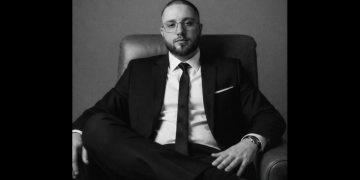







Paul Ickovic, a peripatetic photographer whose sensuous black-and-white portraits and evocative images of street life captured in India, Nepal and Cuba, as well as European cities like Paris and Prague, harked back to the heyday of street photography at midcentury, died on May 23 at his home in Prague. He was 79.
His brother, Thomas Ickovic, said the cause was heart failure.
Mr. Ickovic (pronounced ick-OH-vick) was not a household name, nor was he a particularly prolific photographer. But he loved the variety of the human experience, and he loved women, and he pursued both with energy and considerable charm. The camera was his way to do so. His looks were an asset: Craggy-faced and twinkly-eyed, he was often compared to Keith Richards.
His approach was often likened to that of his hero, Henri Cartier-Bresson, and others whose notion of “the decisive moment” shaped modern street photography and the photojournalism that flourished in the 1940s, ’50s and ’60s. Grace Glueck, writing in The New York Times, called him “a wonderfully old-style photographer.”
“Mr. Ickovic happened to be there when a woman, naked but for a showy necklace and a wisp of a bikini that pointed up her extravagant flab, strode defiantly along a bank of the Seine as a lone male spectator gazed impassively,” Ms. Glueck wrote in reviewing a show of Mr. Ickovic’s work at a Chelsea gallery in 2005. “Through the window of a Paris Metro car speeding from the station he took a mysterious, apparitional silhouette of a man in a sinister hat, one hand balancing a cane. (It’s aptly titled ‘The Phantom.’) When a friend came to tea and impulsively donned a rabbit mask owned by Mr. Ickovic, the photographer quickly grabbed his camera for an ‘Alice in Wonderland’ sendup, enhanced by a baffled cat as a spectator.”
The Cartier-Bresson approach, said Robert Klein, Mr. Ickovic’s longtime gallerist, also involved the geometry embedded in a good photo. “You find a background that will be your foundation and wait for something to happen in front of it,” Mr. Klein said by phone. “Paul did that intuitively. But unlike Cartier-Bresson” — whose habit was to stay invisible, even hiding his camera — “Paul wanted and needed to connect with people.
“Photography,” Mr. Klein continued, “was a way to know them, and know himself. He might take a photo surreptitiously, but then he’d make friends with the subject.”
As Mr. Ickovic told The Times in 1991, “I had tried to be a journalist, but I was distracted by what was going on in the alley beside me.”
Critics and curators knew him as much for his outsize personality as for his work: He was gregarious, bombastic, guileless and opportunistic, irresistible and thoroughly maddening, with a taste for the good life that far outweighed his assets. Those assets were usually nil, according to Mr. Klein, who described him as a lovable beggar and a skilled haggler. Because of his impulsiveness, he said, Mr. Ickovic “was always shooting himself in the foot.”
There was the time he decided to burn all his negatives in his brother’s fireplace, as a way to boost the value of his work. “He quickly realized that was a stupid idea,” his brother recalled, “and sifted through the ashes to retrieve the negatives. Believe it or not, quite a few survived.”
Even so, there is still very little of his work available, Mr. Klein said, “because he often couldn’t find his negatives to make prints, or he wouldn’t have the money to make prints, or if he did, he’d barter them for something else. I once lent him money for shoes, and he spent it on a wallet as a gift for me. If he showed up for a visit, his car would be dead, and I’d have to pay to fix it to get rid of him.”
Another time, Mr. Klein advanced him money for pictures he had sold for him at an art fair in the Hamptons, and Mr. Ickovic spent it all on a fancy watch, which he gave to Mr. Klein. And he once financed a trip to Cuba by selling his camera, which meant no pictures to bring home. (On his Cuba trips, he invariably brought women’s lingerie with him, which he would use to barter for hotel rooms, meals and other favors.)
Mr. Ickovic lived, among many places, in Plainfield, Vt.; Amherst, Mass.; Boston; and Sag Harbor, N.Y. But wherever he landed, he would quickly fall behind in his rent or wear out his welcome as a guest of friends. When a landlord in Sag Harbor gave him the heave-ho, he moved into a storage unit, showering in an office building that kept its doors unlocked at night. That arrangement worked for a few months, until the cameras at the storage facility caught up with him.
But his work speaks for itself. His photographs are in the permanent collections of the Museum of Modern Art and the International Center of Photography in New York; the Smithsonian American Art Museum in Washington; the National Gallery in Prague; and the Bibliothèque Nationale de France in Paris.
Mr. Ickovic nevertheless always struggled, tripped up by his own idiosyncrasies — but also, Mr. Klein said, by an evolving market in photography. “Even as early as the 1970s,” he said, “tastes had changed, and made the work of a romantic street photographer like Paul obsolete.”
Pavel David Ickovic was born on March 16, 1944, in Kettering, England. His Czechoslovakian parents, Eugene Ickovic, a chemist, and Vera Mandl, met at a dance in London. Vera, born to a wealthy Jewish family in Prague, had been sent to England to escape the German occupation; she was training to be a nurse to aid in the war effort. Eugene was on leave from the Czech Brigade, which was fighting alongside the British Army. Most of their family members would die in concentration camps.
After the war the Ickovics returned to Czechoslovakia, where Eugene opened a pharmaceutical factory in Karlovy Vary, before emigrating to Bogotá, Colombia, where he opened several factories and the family grew wealthy. After a military coup in Colombia in 1953, the family fled to Montreal and then to Forest Hills, Queens, with the help of a cousin.
Paul studied music at Queens College before dropping out and traveling to Nepal and India in the late 1960s, flush with $1,000 his parents had given him (the equivalent of nearly $10,000 in today’s dollars). The New York street and fashion photographer Louis Faurer had been a mentor to him in New York, and at some point on that trip Mr. Ickovic picked up a camera and began to record what he saw on his travels.
Back home in the 1970s, he met Mr. Cartier-Bresson — Mr. Ickovic was working briefly for the Boston publisher of Mr. Cartier-Bresson’s work — and they became friends and traded photographs. This would prove helpful later: Mr. Cartier-Bresson’s photos and letters gave Mr. Ickovic a bit of a nest egg.
In addition to his brother, Mr. Ickovic is survived by two sons: Nicholas Ickovic, from his second marriage, to Simona Zborilova, a model, which ended in divorce; and Cristian Sanders, from his relationship with Karin Sanders, a gallerist. His first marriage, to Sarah Stahl, also ended in divorce.
Over the years Mr. Ickovic published a number of books of his photography, notably “Kafka’s Grave and Other Stories” (1986), which had an introduction by the playwright David Mamet. That book was produced with the help of Joshua Ginsberg, an entrepreneur and environmental scientist who became a friend and patron.
In the summer of 2021, the Bibliothèque Nationale showed a retrospective of Mr. Ickovic’s work in tandem with a larger show of Mr. Cartier-Bresson’s photographs. Mr. Ginsberg published the catalog of his friend’s show, which was called “In Transit.”
Mr. Ickovic said he was a little annoyed, Mr. Ginsberg recalled, that “Henri got three rooms” but “I only got one.”



