


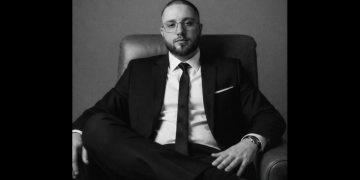






Jürgen Moltmann, who drew on his searing experiences as a German soldier during World War II to construct transformative ideas about God, Jesus and salvation in a fallen world, making him one of the leading Protestant theologians of the 20th century, died on Monday at his home in Tübingen, in southwest Germany. He was 98.
His daughter Anne-Ruth Moltmann-Willisch confirmed the death.
Dr. Moltmann, who spent most of his career as a professor at the University of Tübingen, played a central role in Christianity’s struggle to come to grips with the Nazi era, insisting that any established set of beliefs had to confront the theological implications of Auschwitz.
As a teenage conscript in the German Army, he barely escaped death during an Allied bombing raid on Hamburg in 1943. The horrors of the war led him to chart a path between those who insisted that faith was now meaningless and those who wanted a return to the doctrines of the past as if the Nazi era had never occurred.
Though his work ranged widely, including ecological and feminist theology, he specialized in the branch of theology known as eschatology, which is concerned with the disposition of the soul after death and the end of the world, when Christians believe that Christ will return to earth.
Dr. Moltmann outlined his eschatology, and established his reputation, with a trilogy of books, beginning with “The Theology of Hope” in 1964.
Many traditional Christians hold that Christ will return in judgment, and that sinners and nonbelievers will be cast into eternal damnation. Dr. Moltmann fiercely disagreed, arguing that the end of the world would cease suffering for all, regardless of faith or moral rap sheet.
“From first to last, and not merely in the epilogue, Christianity is eschatology, is hope, forward looking and forward moving, and therefore also revolutionizing and transforming the present,” he wrote.
The ensuing debate over “The Theology of Hope” swept through Christian thought, making enough noise to land Dr. Moltmann on the front page of The New York Times in 1968.
Dr. Moltmann followed with “The Crucified God” (1972), in which he tackled a fundamental question for many Christian theologians: Does God suffer, or, as the all-powerful being, is he incapable of experiencing pain and sorrow?
He posited that after Auschwitz, when so many believers asked, “God, where are you?,” the only possible answer was that God had chosen to be there, suffering alongside the oppressed.
“There cannot be any other Christian answer to the question of this torment; to speak here of a God who could not suffer would make God a demon,” he wrote. “To speak here of an absolute God would make God an annihilating nothingness.”
Dr. Moltmann was a close friend of Hans Küng, a progressive Roman Catholic thinker who also taught at Tübingen. But whereas Dr. Küng was so outspoken in his criticisms of the Catholic Church that he was censured by the Vatican, Dr. Moltmann preferred to let his political views emerge through his writing.
Nevertheless, his readership reached beyond the world of Protestant theologians. Though his writing could be dense, it was also marked by an exciting curiosity and an insistence on the role of religion in fighting for social justice that drew avid followers, who sometimes referred to themselves as “moltmanniacs,” on both sides of the Atlantic.
“The church of the crucified Christ must take sides in the concrete social and political conflicts going on about it and in which it is involved, and must be prepared to join and form parties,” he wrote in “The Crucified God.”
Jürgen Dankwart Moltmann was born on April 8, 1926, in Hamburg and raised in a small village in the city’s far suburbs, where his parents, Herbert and Gerda (Stuhr) Moltmann, relocated as part of a social movement that emphasized simple, rural living. His father taught high school, and his mother managed the home.
The Moltmanns were secular but conventional enough to send their son to the local church for Sunday school. By then, Nazism had swept the country; he later recalled an antisemitic pastor arguing that Jesus Christ had been Aryan and not Jewish.
Herbert Moltmann was drafted into the German Army in 1939, and his son, still a teenager, was forced to follow him in 1943. For intellectual sustenance, he took with him a copy of Goethe’s “Faust” and Nietzsche’s “Thus Spake Zarathustra.”
In the Army, he was assigned to man an antiaircraft gun defending Hamburg from Allied forces. Over the course of 10 days in the summer of 1943, some 8,650 tons of bombs were dropped over the city and killed 40,000 people, mostly civilians.
One night a bomb exploded nearby, throwing him to the ground and killing a friend instantly. With fires closing in around him, he grabbed a piece of wood and floated to safety in a nearby lake.
“During that night I cried out to God for the first time in my life,” he wrote in his autobiography, “A Broad Place” (2007). “My question was not ‘Why does God allow this to happen?’ but ‘My God, where are you?’”
About a year later, he surrendered to British troops and was sent to prison camps in Belgium, Scotland and England. He watched as his fellow prisoners sank into depression after realizing the enormity of their country’s crimes, and he became convinced that traditional ideas about faith were no longer viable.
Under an educational program run by British authorities, he began studying theology, religious history and Hebrew. He returned to Germany in 1948 and received a doctorate of theology from the University of Göttingen in 1952.
Dr. Moltmann had a variety of influences, including the Swiss theologian Karl Barth and the Marxist philosopher and avowed atheist Ernst Bloch, whose three-volume work “The Principle of Hope” (1938-47) inspired his early scholarship.
He married Elisabeth Wendel, a fellow student who also became a prominent theologian, in 1952, and the two were together until her death in 2016. Along with his daughter Anne-Ruth, he is survived by three other daughters, Susanne Moltmann-von Braunmühl, Esther Moltmann and Friederike Moltmann; five grandchildren; and seven great-grandchildren.
Dr. Moltmann wrote more than 40 books, including a set of six on systematic theology, another branch of study that attempts to create a coherent, comprehensive set of doctrines defining Christian belief.
Yet throughout his career, he returned to the point he made in his first books: God chooses not to be a judge of mankind, but to be a fellow sufferer, and he will one day end suffering for everyone, not just a select few.
“I am convinced that God is with those who suffer violence and injustice and he is on their side,” he said in a 2012 interview with the British magazine Third Way. “He is not the general director of the theater, he is in the play.”


