





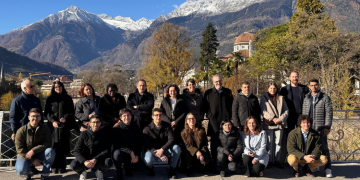


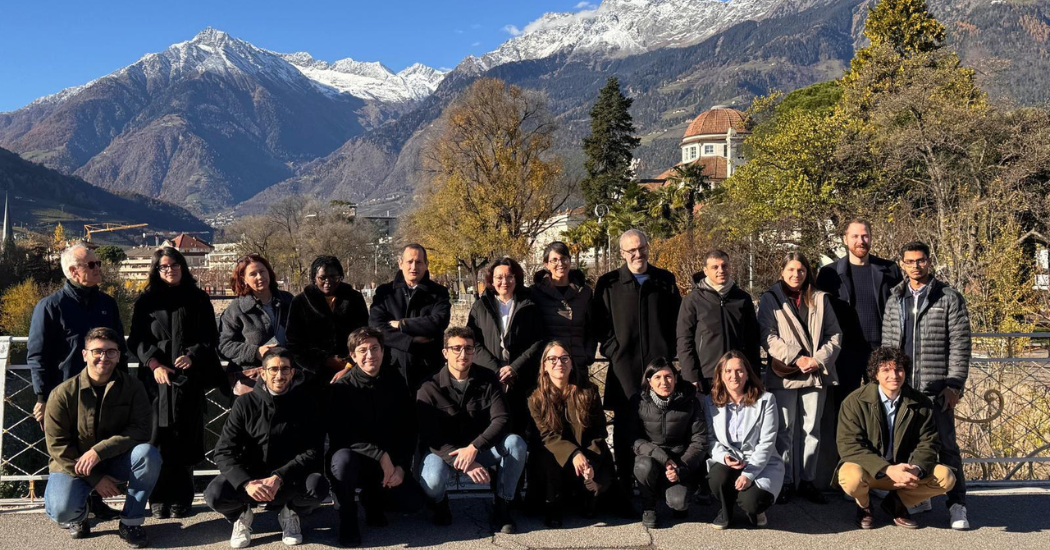
Among the many topics discussed during the Scientific Retreat MAGI in Precision Medicine and Omics Sciences at Villa Hoffmann in Merano (17-21 November 2025), one of the most exploratory themes concerned the possible integration of theoretical physics into computational biology. Rather than presenting finished tools, these sessions were conceived as a forum in which physicists, mathematicians and bioinformaticians could examine whether new physics-driven formalisms might, in the future, contribute to faster and more informative models of protein–ligand interactions.
The discussion was introduced by Prof. Eglantina Kalluci and her mathematics group from the University of Tirana, together with the theoretical physicists Claudio Peqini and Rudina Osmanaj, working in close dialogue with MAGI’s bioinformatics and data-science teams. Starting from the limitations of traditional molecular-dynamics simulations—often based on entropy-driven energy minimisation and associated with high computational cost when screening large compound libraries—the group explored a series of working hypotheses on how concepts from condensed-matter physics, electromagnetic interactions and non-linear dynamics might be translated into new computational schemes. The aim, at this stage, is not to replace established approaches, but to understand whether complementary models could be formulated that are better suited to capturing rapid recognition events and long-range physical effects in complex molecular systems.
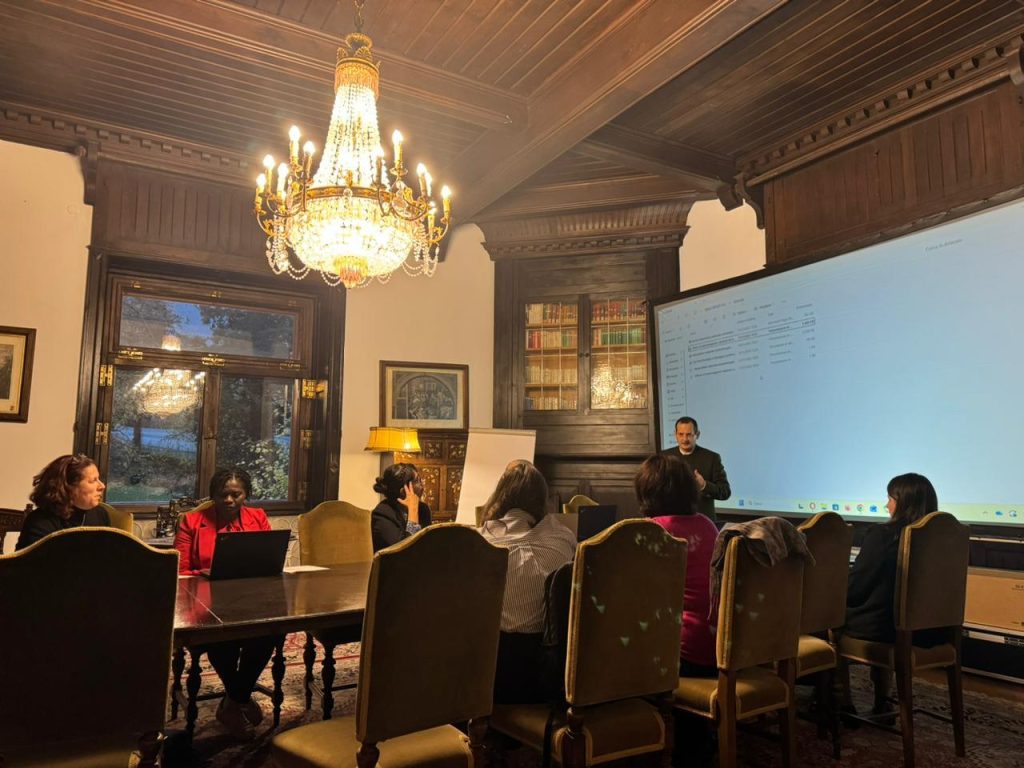
In this context, participants considered a range of questions. Could simplified, physics-inspired representations of protein surfaces and electrostatic fields provide sufficiently accurate predictors of binding interfaces to be useful in pre-screening large libraries of compounds? Might certain classes of non-linear differential equations, familiar in other areas of physics, be adapted to describe transitions between conformational states relevant for docking? And to what extent can such models be parameterised using the structural and thermodynamic data already available in public repositories? Early exploratory simulations and toy models, presented jointly by the Tirana group and MAGI researchers, suggested several lines of investigation, but also highlighted the need for systematic benchmarking against established docking tools and for careful assessment of numerical stability and interpretability.
A further point of discussion concerned the possible integration of these physics-driven approaches with MAGI’s existing multi-omics and machine-learning pipelines. If robust predictors of local interaction energy or structural complementarity could be derived from physical models, they might in the future be combined with genomic, transcriptomic and metabolomic data to prioritise therapeutic targets in rare diseases. Conversely, multi-omics data from patients could help to constrain and validate the models by indicating which pathways and protein complexes are most relevant in specific clinical contexts. In this part of the discussion, contributions also drew on previous exchanges with Dr Matteo Gregorini (CNR, Pisa), an expert in artificial intelligence and high-performance computing, whose perspective helped to frame how physics-based descriptors and data-driven models might eventually be combined in a coherent workflow. These ideas remain at a conceptual stage, but the retreat offered an opportunity to map out potential synergies between theoretical work, AI methodologies and data-rich clinical research.
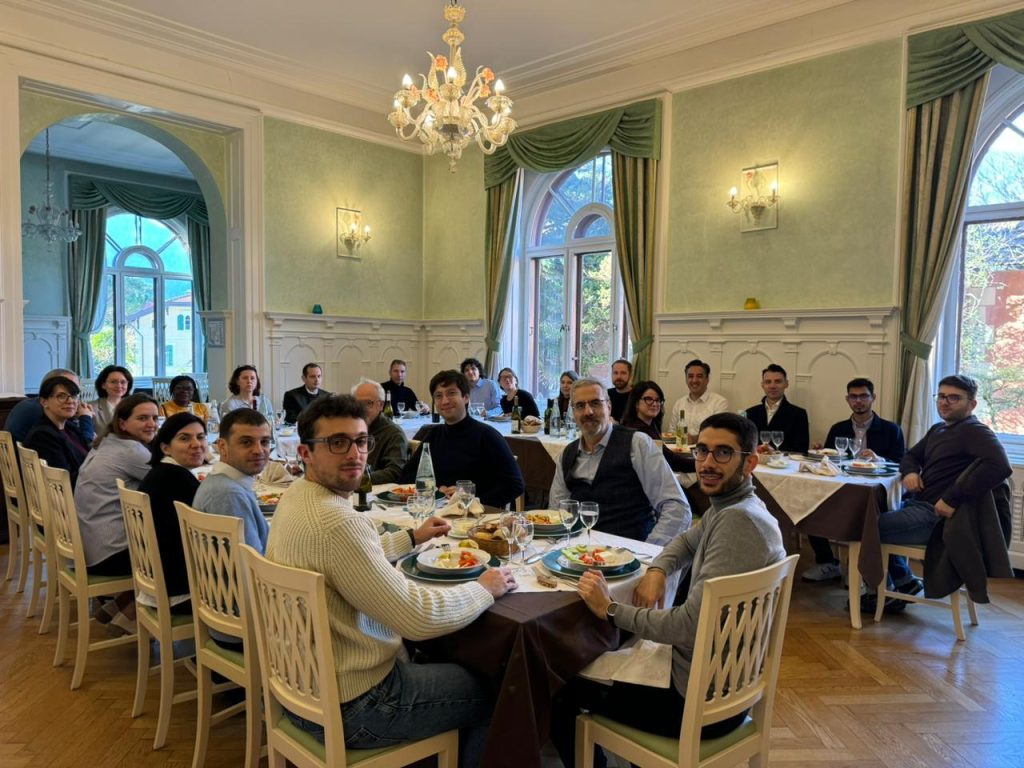
The clinical dimension of these reflections was reinforced by input from MAGI’s partners in cardiology, ophthalmology, neurology and vascular medicine. Colleagues from the University of Brescia outlined open questions in computational cardiology, including the modelling of ion-channel variants involved in cardiomyopathies and channelopathies. Ophthalmology groups from the University of Milan, the San Paolo and Sacco Hospitals, and the Gemelli Polyclinic in Rome recalled the challenges of interpreting variants in genes associated with inherited retinal dystrophies and macular disorders, and discussed how improved protein-structure and docking models might one day contribute to understanding pathogenic mechanisms or designing targeted therapies. In neurology and neuroimmunology, collaborators such as Prof. Paolo Manganotti (University of Trieste) and Dr Lorenzo Lorusso highlighted rare encephalopathies and demyelinating conditions in which small changes at the protein level may have disproportionate functional consequences.

For vascular anomalies, the work of Prof. Raul Mattassi and Dr Cavalca, presented in previous meetings, was taken as a reference point and revisited in Merano as an example of how complex signalling pathways and malformation phenotypes might eventually benefit from more refined models of receptor–ligand interactions. Their clinical experience, although not represented by direct participation at this retreat, provided a useful backdrop for considering where future physics-inspired modelling efforts could intersect with real-world diagnostic and therapeutic questions.
Throughout these exchanges, the emphasis remained on possibilities rather than on immediate applications. Participants repeatedly underlined that any new physics-inspired algorithm would need extensive validation, transparent documentation and close comparison with existing tools before being considered for use in translational or clinical research. At the same time, the retreat made it clear that many clinicians are keen to follow the evolution of such methods, provided that communication between disciplines remains clear and that expectations are kept realistic.
In summary, the Merano discussions on physics-driven models for molecular interactions illustrated how MAGI’s multi-disciplinary identity can foster dialogue between seemingly distant fields. The contributions of Prof. Eglantina Kalluci, Claudio Peqini, Rudina Osmanaj, Dr Matteo Gregorini and the various clinical teams did not aim to define a finished “future of protein modelling”, but rather to sketch a set of questions, preliminary ideas and testable hypotheses. By situating these reflections within concrete clinical scenarios—cardiology, ophthalmology, neurology and vascular anomalies—the retreat helped to anchor visionary concepts in actual medical needs, opening space for gradual, collaborative development in the years ahead.