





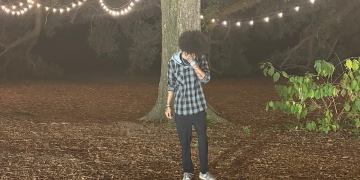




The first time I met Neil Diboll, he set his front yard on fire. On purpose.
It was part of a lesson that Mr. Diboll, a prairie ecologist and nurseryman, was eager to share about native plant communities. The prairie species that had replaced his lawn were adapted to fire, he informed me, because regular wildfires had influenced their evolution.
That was more than 30 years ago. Since then, Mr. Diboll has continued to find dramatic ways to capture gardeners’ attention and educate them. That’s essential, he knows, when you’re dealing with ideas that are unfamiliar to most people.
Mr. Diboll is now 42 years into the business of propagating and selling seeds and plants of native Midwestern and Eastern species at his Prairie Nursery, in Westfield, Wis. And we find ourselves in the age of the pollinator plant, and the pollinator garden, and interest keeps growing. But it wasn’t always so.
Mr. Diboll remembers way back when — when native plants were referred to as weeds, for example.
“When I started doing this,” he said recently, “the local farmers called us ‘the weed farm.’” (And they didn’t mean cannabis.)
“I think it’s safe to say I was prairie when prairie wasn’t cool,” he added, recalling his first six years of owning the nursery and living in a trailer as one item of proof. “Let’s just say that we were a little ahead of the curve. I literally couldn’t give this stuff away.”
He remembers when nobody — beyond a few academics studying prairie restoration at a couple of Midwestern universities — knew what a purple coneflower was.
While it is now one of the most familiar natives and among the most widely sold, purple coneflower (Echinacea purpurea) had not yet come of age and been deemed garden worthy. That all changed, Mr. Diboll said, around 1989.
“Purple coneflower was elevated from wildflower to quote-unquote perennial, and it was allowed inside the garden gate,” he said. “And it paved the way for other native flowers and grasses to enter. It wasn’t just hostas and daylilies and iris anymore.”
Small native nurseries like the one he bought in 1982 had been propagating and selling the coneflower for a decade already, “but the rest of the country wasn’t into it, because it wasn’t popularized,” he said. “And then all it takes is a few magazine articles, and everybody goes crazy, and they get the new plant.”
But not every plant delivers weeks of big purple-to-pink flowers with prominent orange centers that scream “get to know me” the way the coneflower does, which earned it a moment in the spotlight and a place in so many gardens.
“Despite the fact that you’re seeing native plants here and native plants there, everywhere,” he said, “the actual familiarity with these plants still has not fully penetrated into the consciousness and the knowledge base of American gardeners. It’s increasing rapidly, but they are still not your go-to plants.”
We’re more likely to be drawn to the flats of annual petunias in the garden center in spring than we are to seek out the perennial wild petunia (Ruellia humilis), with its months of purple flowers on foot-tall stems. But butterflies and hummingbirds know a good thing when they see it.
Mr. Diboll hopes that “The Gardener’s Guide to Prairie Plants,” published last spring, which he wrote with Hilary Cox, a landscape designer and horticulturist, will help spread the word about all of the choices available to gardeners. Beyond the detailed portraits of 145 species, the book covers how to design with them, propagate and maintain them. (And yes, there is a chapter on controlled burns, in case you’re interested in setting your own yard on fire.)
Make Room: Culver’s Root and Rattlesnake Master
As with the coneflower, often it’s color that catches gardeners’ attention first. Unless we have a pastel-themed garden, we often pass over white-flowered perennials like wild quinine (Parthenium integrifolium), which provides up to three months of bloom to delight humans and an impressive diversity of pollinators, Mr. Diboll said.
By favoring more vivid shades, we miss some other exceptional possibilities, as well. Consider Culver’s root (Veronicastrum virginicum), he said, “one of my absolute top 10 favorites.” In summer, the three- to six-footer is topped with candelabras fashioned of wands of tiny white flowers, held above tiers of leaves encircling the stem in whorls.
“It’s not flashy; it’s stylish — in my opinion, one of the most stylish of all our native prairie plants,” Mr. Diboll said. “It’s regal: Just look at the stature, and the way it carries itself. Is it gorgeous? Is the foliage fantastic? Does it make a statement in a garden when you put three or five of them together? Oh, yeah. But it doesn’t have that big, flashy flower.”
To find out whether Culver’s root or another plant is native to your area, Mr. Diboll recommends exploring the range maps, known as the BONAP maps, from John T. Kartesz’s Biota of North America Program. He includes them in the book, and on the nursery website, too.
Like Culver’s root, rattlesnake master (Eryngium yuccifolium) is distinctively architectural, its greenish-white flowers held three to five feet high, resembling so many little spiny golf balls. Thanks to its blue-green basal rosettes of bristly foliage, it could easily be mistaken for a cousin of a yucca, Mr. Diboll said, but it is actually in the Apiaceae (carrot or parsley) family — an umbellifer.
Rattlesnake master is popular with a range of bees and wasps, and is also widely used by parasitic wasps, Mr. Diboll said, making it a great plant for organic gardeners in search of natural pest control.
He tells the story of a customer who had a terrible tomato hornworm problem. The problem disappeared once his little prairie plot, sown from a seed mix that included rattlesnake master, reached blooming age. The wasps, it appeared, were attracted by the Eryngium’s nectar — and then, as if to say thank you, they laid their eggs on the tomato hornworms, parasitizing the pests.
“Correlation does not imply causation, as we all know from statistics,” Mr. Diboll said. “But it’s a pretty strong correlation.”
The customer’s response got right to the point: “My prairie is my pesticide.”
Mountain Mints Have Their Moment
One genus of white-flowered perennials that has managed to gain gardeners’ attention lately is mountain mint (Pycnanthemum), a top pollinator resource. More than five years ago, Mr. Diboll said, there was hardly any demand, but that has shifted. The reality that we are in a pollinator crisis has begun to sink in.
Another uptick: In the 1980s, Prairie Nursery used to sell pussytoes (Antennaria neglecta), one of the lowest-growing prairie species, with rosettes of light green leaves that have fuzzy, silvery undersides and send up spring blooms under a foot tall. But demand was so weak that the nursery stopped carrying it. Now it’s back.
“I think what’s happened here now is that people are replacing nonnative ground covers with native ground covers,” Mr. Diboll said. He rates pussytoes as “a top one” for sandy or gravelly soil, including between rocks (but not for clay soils or even good loam).
A more adaptable species: Ohio goldenrod (Solidago ohioensis or Oligoneuron ohioense), which occurs naturally in fens and wetlands, and grows well in clay and good garden soil, too. It is Mr. Diboll’s pick among the goldenrods, with some of the biggest flower heads of all, forming a three- to four-foot-high clump. And it does not run rampant by way of rhizomes — underground stem tissue that can sprout new roots and shoots — as some goldenrods do, to gardeners’ dismay.
“A lot of people have an aversion to Solidagos,” he said. “But I think this one changes a lot of people’s minds.”
Because of the well-known relationship with the monarch butterfly, milkweeds (Asclepias) are also finding a place in more gardens.
Whorled milkweed (A. verticillata) may not bear the orange or pink flowers of some of its cousins, but Mr. Diboll recommends giving this white-flowered species a look. It grows in “really lousy soils,” he said, including sandy, rocky ones and even subsoil clay — places most plants resent.
The leaves of the two- to three-foot-tall species are “filamentous — really narrow,” he said, yet monarch caterpillars use this as a host plant as hungrily as they do other milkweeds with more substantial foliage. “It’s astounding. You see them dangling off these little leaves — how do they do that?”
He is delighted by the caterpillars’ agility and appetite, because that’s the point, isn’t it? To welcome and feed the organisms that power the food web.
In traditional horticulture, Mr. Diboll said, “it’s generally been the goal of the planter to provide themselves with nourishment — either physical nourishment or emotional nourishment.” His most important job over the past few decades, he said, may have been to encourage people instead to “look at the garden as a shared resource for all life.”
That’s the message he communicates, over and again. “I tell people, ‘If I don’t see holes on the leaves of my plants, I’m a failure as a gardener.’ We have to get over this perfectionist ‘It has to be just for us.’ The garden is for others, and that’s the real revolution of native gardening, in my opinion.”
Margaret Roach is the creator of the website and podcast A Way to Garden, and a book of the same name.
If you have a gardening question, email it to Margaret Roach at gardenqanda@nytimes.com, and she may address it in a future column.