




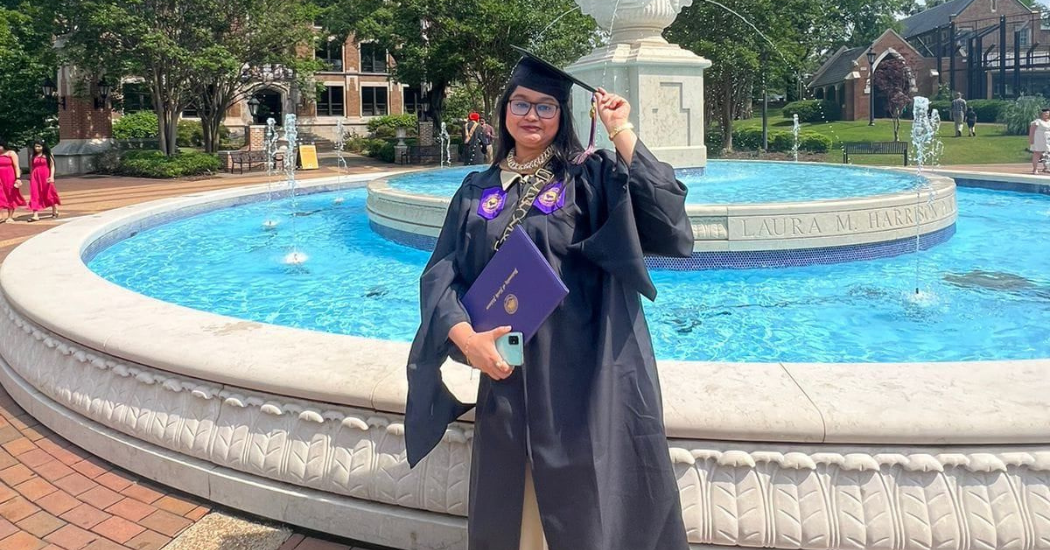
Ananna Mosaddeque did not come to the United States to follow a well-worn path. The Bangladeshi PhD candidate at the University of Memphis came with a specific obsession: figuring out how information systems, accounting, and artificial intelligence can work together to solve problems that neither field can crack alone. Several years and multiple published papers later, she is making a convincing case that they can.
Mosaddeque is pursuing her doctorate in Business Administration with a concentration in Accounting and Information Systems, and her research reflects exactly that combination. She is interested in the places where financial accountability meets technological power – where a well-designed system does not just process data but changes outcomes for real people.
Her work spans an impressive range. She has published research on how AI and machine learning can strengthen cybersecurity in the American healthcare industry, a sector that has become one of the most targeted by digital attacks in recent years. She has explored how automation and intelligent forecasting tools can help governments design better national healthcare policies. She examined the mental health implications of generative AI and virtual reality at a time when those questions have never been more urgent. And she has investigated how AI can create smarter financial incentives for wireless energy systems in smart cities – a glimpse into the infrastructure challenges that will define the coming decades.
Across all of it, a single thread runs through her scholarship: technology is only as valuable as the systems of accountability built around it. That is where accounting comes in, not as a dry bookkeeping exercise but as a discipline that asks who bears the cost, who captures the benefit, and whether the numbers tell a true story.

For an international student far from home, the body of work she has built is remarkable. Mosaddeque has accumulated over fifty citations across her publications, a figure that reflects not just productivity but genuine influence – other researchers reading her work and finding it worth building on. She has done this while navigating a doctoral program in a country not her own, in a field that demands both technical precision and conceptual ambition.
Her story is a reminder that some of the freshest thinking in American academia arrives from outside it. Ananna Mosaddeque came from Bangladesh with a problem she wanted to solve. She is well on her way.



